Malerweg, Day 1 Bad Schandau - Altendorf - Hohnstein (15.8 km, ↑ 556 m, ↓ 432 m)
This year is turning out to be an early hiking year for us, and will be a quite different from my previous years', too. I have always wanted to wildcamp, with a proper tent, waking up in the wilderness, making my own coffee and having my breakfast as early as I can without having to wait for the rifugio kitchen to open. But wild camping in Europe is complicated. On the Alta Via 1 and the Tour du Mont Blanc it's technically possible, though mostly you have to do it discreetly, or find ground above a certain altitude where the rules relax and this requires a certain level of planning and research that I was not yet ready for. Because of this, I thought I would save wild camping for hikes where it is actually allowed, so I don't have to deal with the anxiety of the very off chance someone would knock on my tent and ask me to move away in a language I do not understand. Plus, there is a certain charm to staying in alburgues or rifugios too - meeting people, for example, are much easier when you are seated with other hikers in a communal space during dinner, and you do it repeatedly for the next few days to the point where you'd recognize each other's faces on the trail.
Well, that camping year is this year. Our big hiking trip this year - which is upcoming! - would be mostly wildcamping. However, since this is our first big wildcamping trip, we have to buy every gear almost from scratch - tent, sleeping mats, stoves and whatnot - and being a planner that I am, I suggested that we have to do a dry run where we test all of our gears. A dry run here means going hiking, except that it will be a much smaller and shorter trip.
So that is the story of how we ended up in the Malerweg on Easter weekend.
The Malerweg is a much longer trail - 180 km throughout the Elbe sandstone mountain range, just south of Berlin and is reachable by a two-hour train which makes a convenient trip. The trail probably deserves much more than a long weekend, but the camping logistics even for such a short trip were already quite complex. Germany does not allow wild camping, which meant we had to finding official campsites, and along the way I discovered that each campsite has its own completely individual logic: Ostrauer Mühle requires a four night minimum. Entenfarm doesn't require booking at all ("you don't need to book if you're only camping for one night!!!", with exclamation marks, the reply to our booking request says). The Malerweg's own website lists campsites for only a handful of its stages, which is not exactly helpful when you are trying to plan a route around them. In the end, we gave up trying to follow the trail by the books and improvised: hiking Day 3 and Day 2 in reverse, starting not from Pirna but from Bad Schandau, a spa town that wasn't quite on the trail but was close enough to Altendorf to make it work.
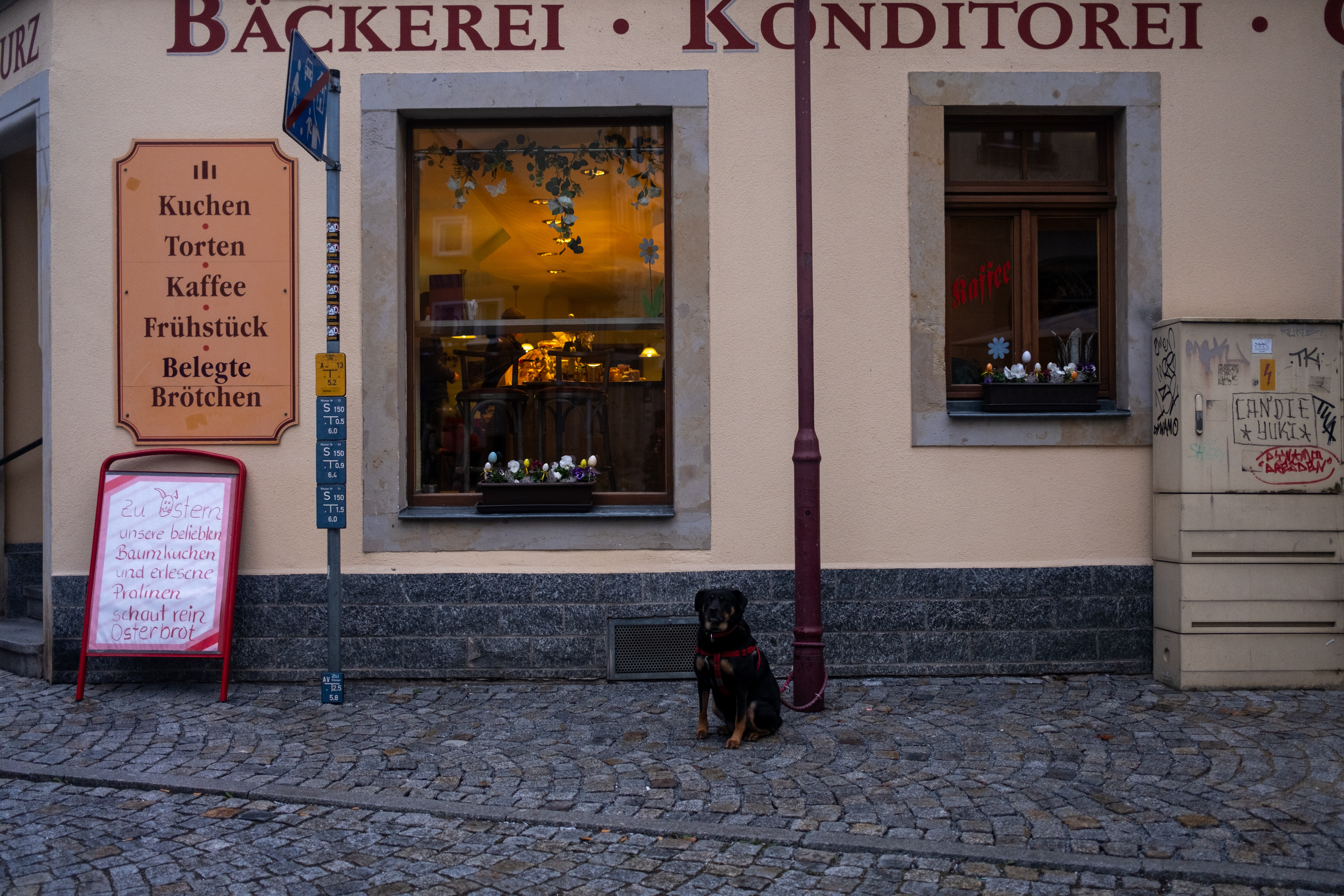
Bad Schandau on Easter morning was quiet and grey, the clouds hanging low over the river and if the forecast was to be believed, they wouldn't nudge for the entire day. We packed our bags anyway, and walked to the only bakery open in town, where the options were laugen-käse and pretzels and various sandwiches. Despite the gloom, there was still a stream of hikers, some of them stopping by the bakery too. Apparently, for everyone else too, the hike must go on.
After breakfast we walked back to the park in front of our hotel, which doubled as the first stop of the Kirnitzschtalbahn. It is tiny historic tram that runs through the Kirnitzsch valley. We discovered it by accident the afternoon before, when Dylan spotted it slowly stopping outside our apartment, the tram full of tourists. We had just arrived from Berlin after a lunch stop in Dresden and had nothing to do with the afternoon, so we looked up the schedule and got on.
The tram has been running since 1898, which I found difficult to reconcile in my head. Anything before the First World War exists in my head as a remote history that I couldn't really imagine as lived experience. But people had been taking this exact tram through this exact valley for over a hundred years, probably also doing hikes around the valley, though maybe without the trail runners and the trekking poles and the freeze-dried meals in their backpacks. We rode the tram all the way to the terminus at Lichtenhain Waterfall and back, just in time for dinner.
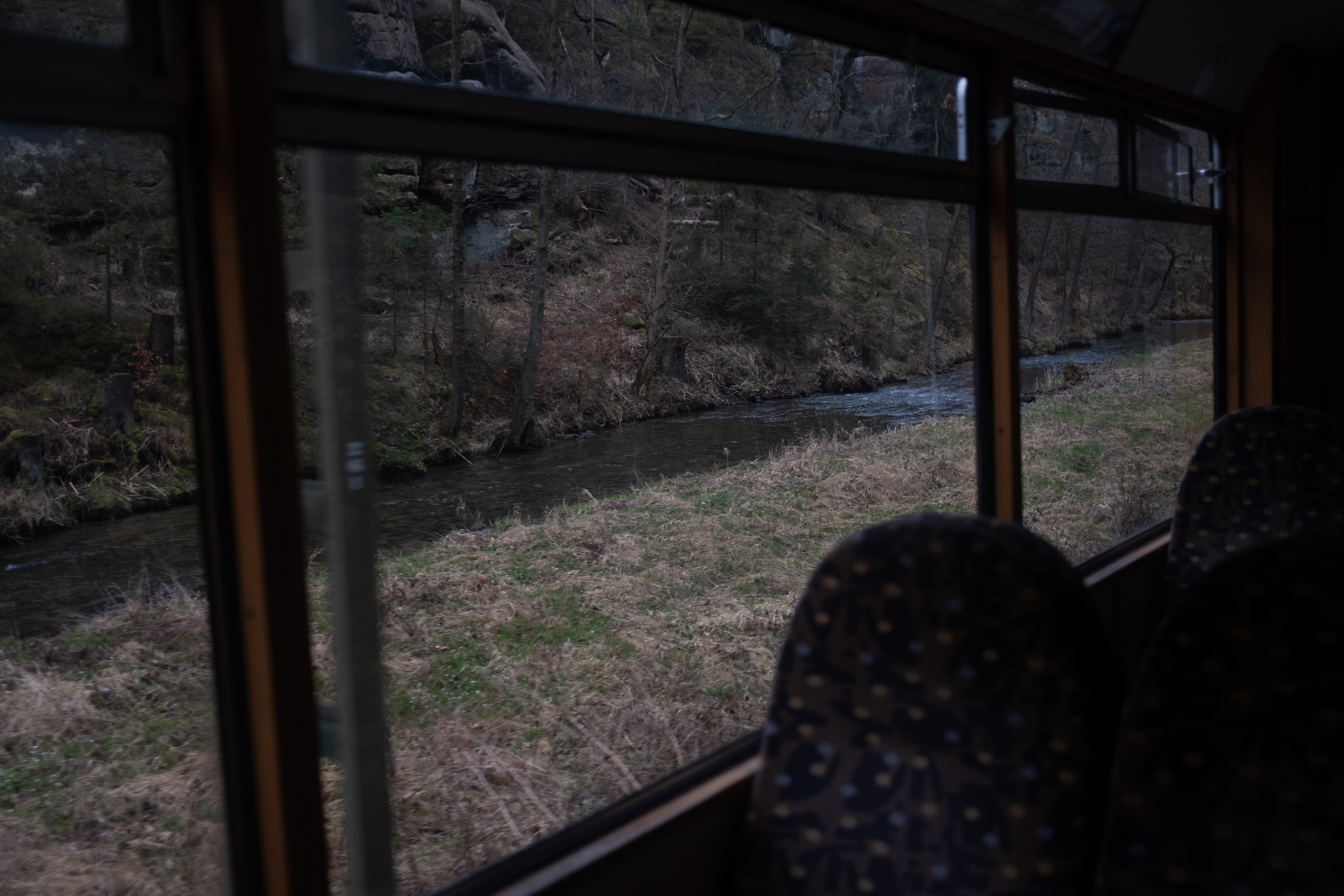
Back to the morning of our hike, we were the only passengers on the first tram of the morning. Ten minutes later we were at the Ostrauer Mühle tram stop, officially beginning our hike. It always takes me a little while to remember how to carry extra weight on my shoulders. The first twenty minutes of any hike I am always making small adjustments, and waiting for the moment my body stops complaining and starts moving properly. By the time we reached Altendorf I had found my strides and my legs felt noticeably lighter than they had on the Tour du Mont Blanc.
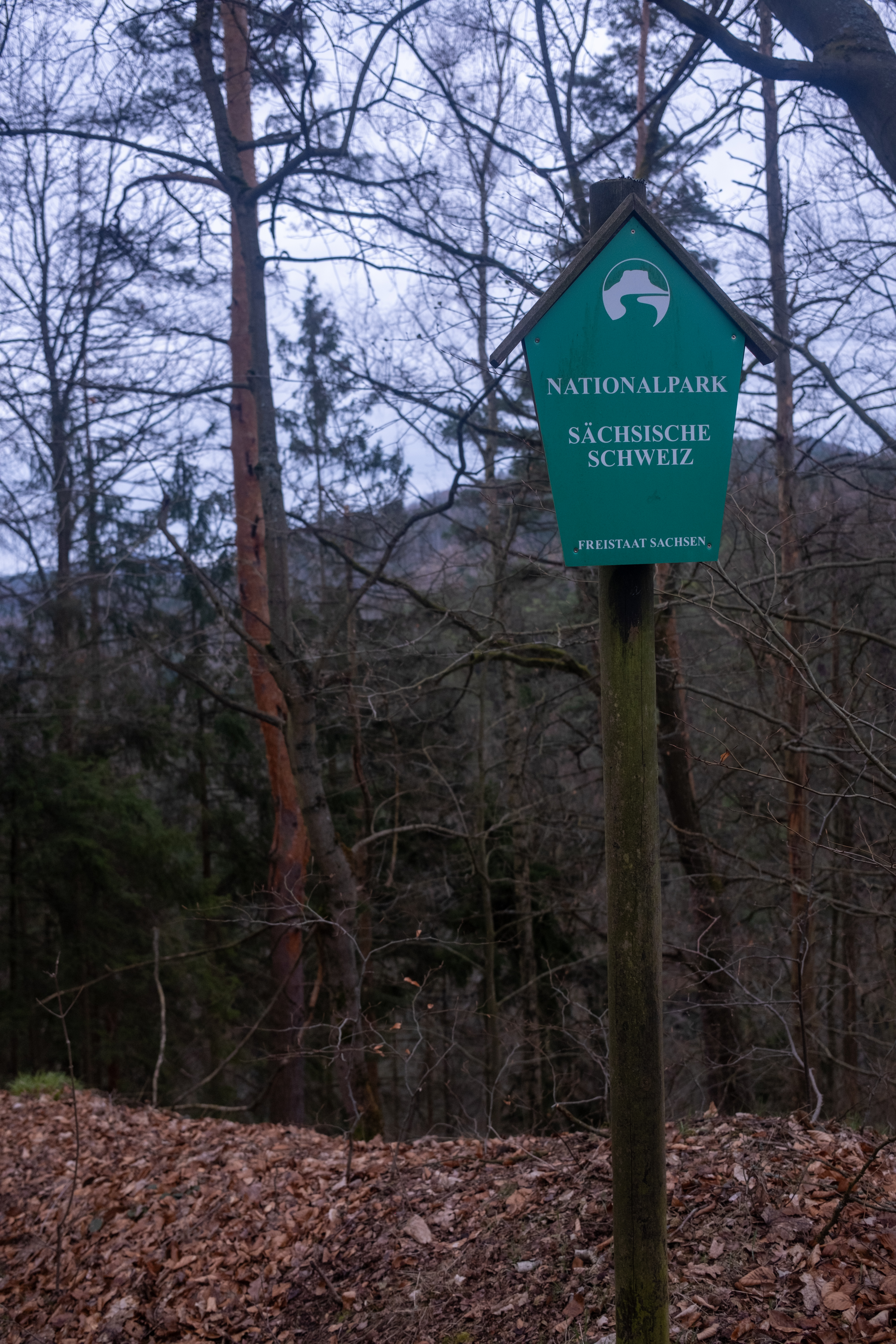
Altendorf is a small town, and there was not much going on except for some inns here and there, there was no supermarket or even a restaurant, so it was a good call to have our breakfast back in Bad Schandau. We walked from one end to the other in minutes and then we were out, onto a gravel road leading into forest, or I guess what had once been a forest. The trees here were dead, brown and bare which had the unexpected effect of opening up the views while also making me wonder, what had happened here?
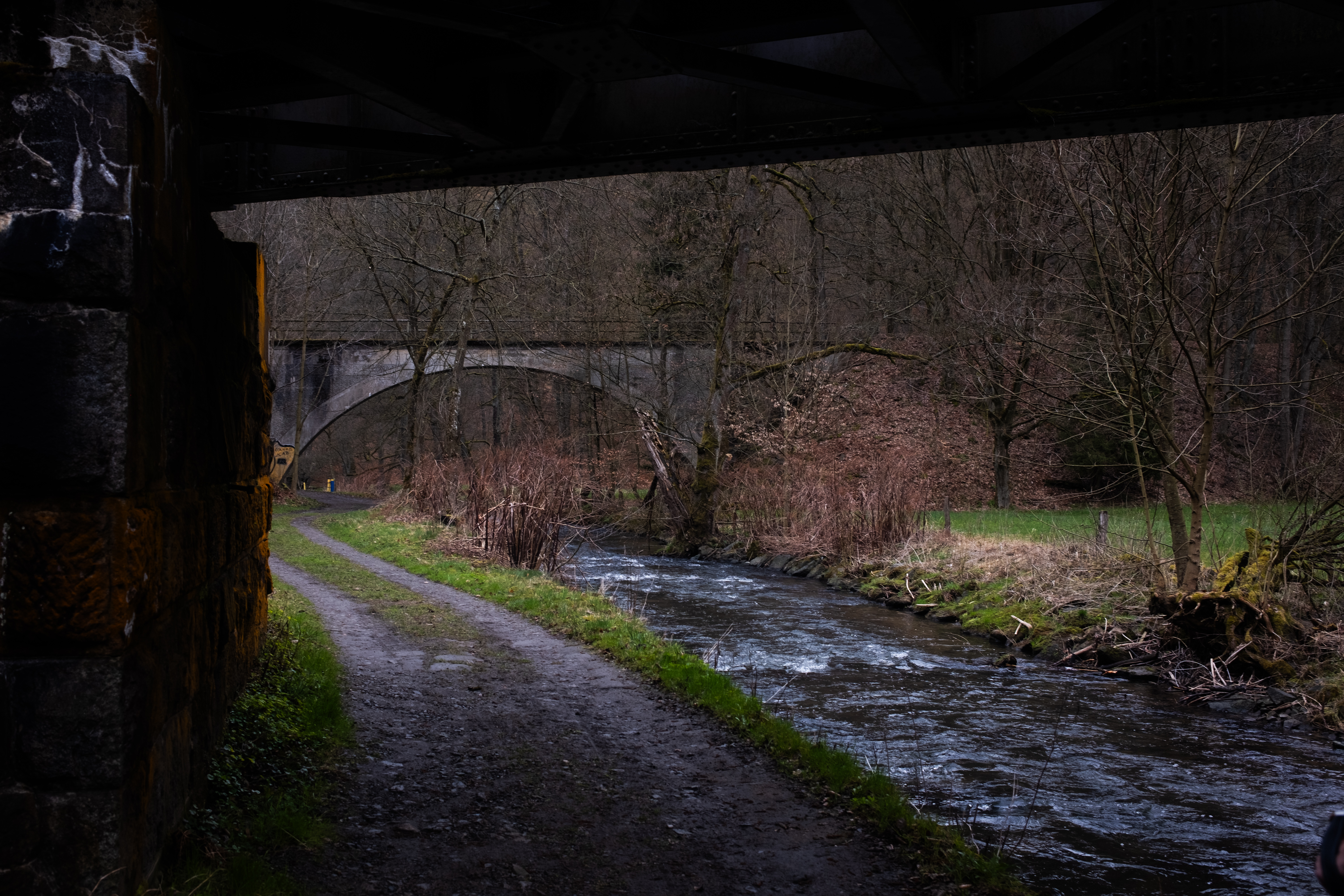
The trail followed a train track for a while, which I always find interesting, especially when it cuts through places that are a bit out of their way. It makes me think that some people have chosen to build their life here, despite the options of living in a much bigger city, and they are indeed making it work here. We followed it to Kohlmühle, a small district in the town of Goßdorf, where people were setting up an Easter market in the drizzle.
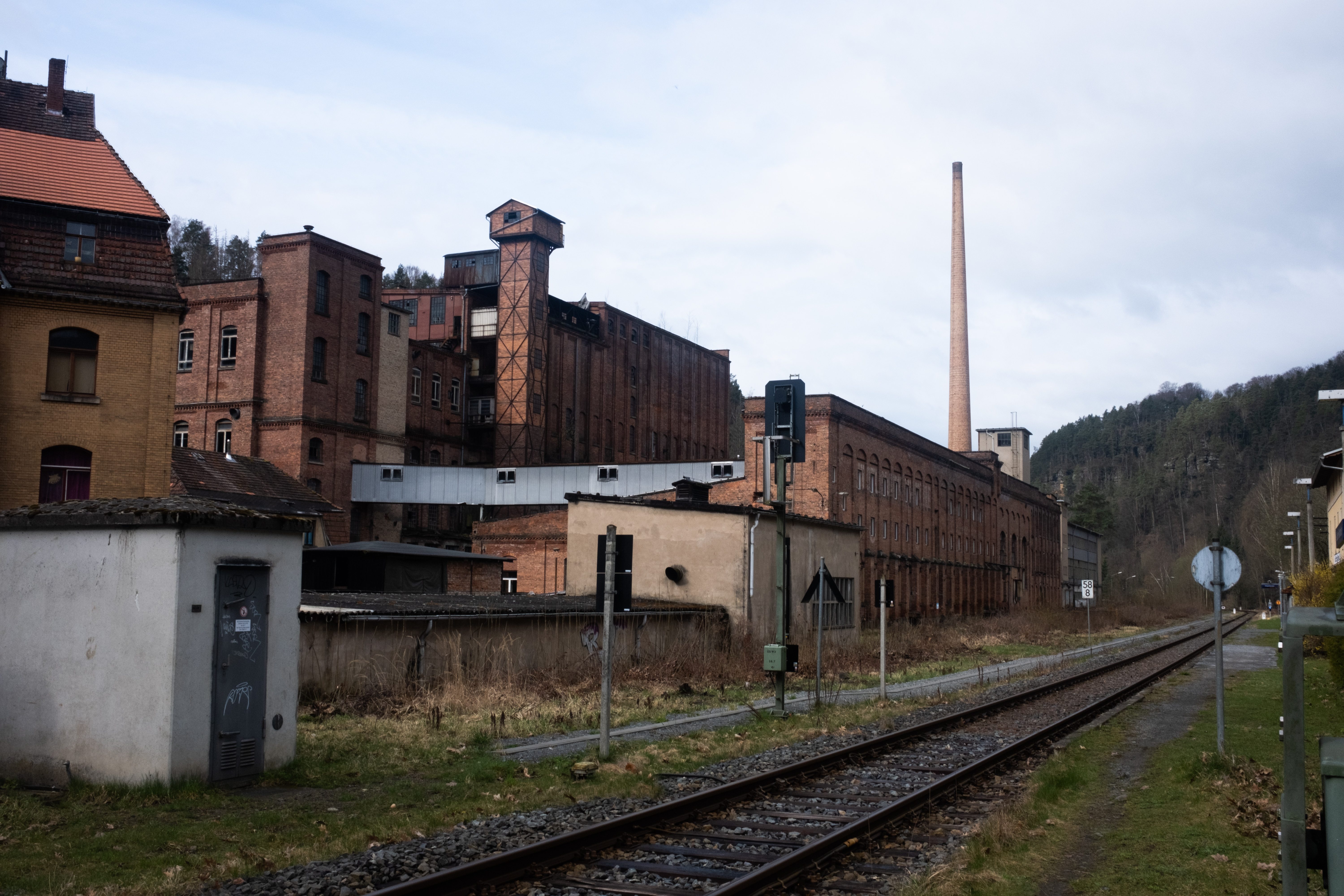
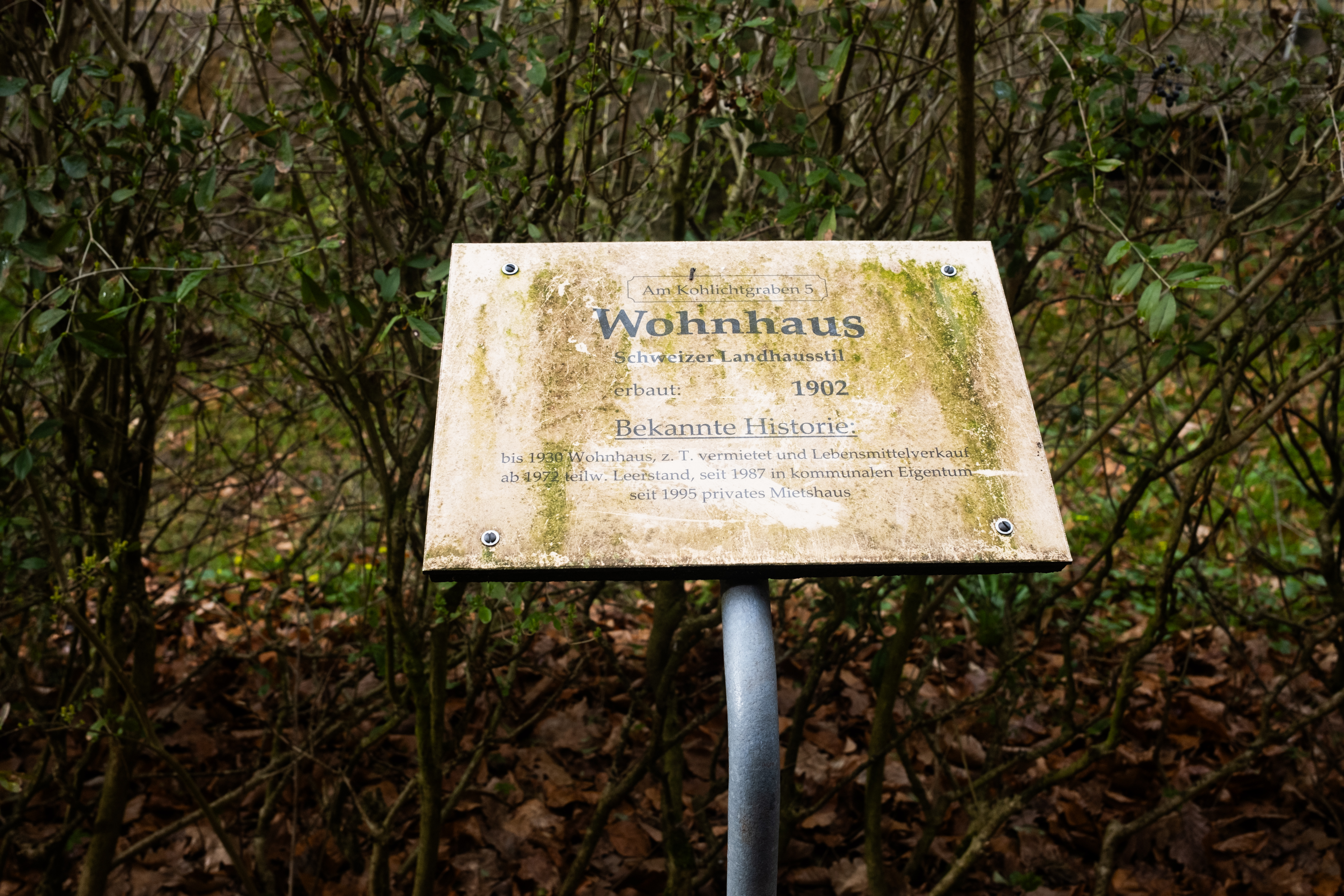
Kohlmühle's most prominent feature is a nonfunctional linoleum factory, surrounded by buildings that were in various stages of falling apart. I kept looking at them, these buildings always catch my eye, partly because they're good to sketch. But we had to press on since it looked like it was going to rain anytime soon. Another thing that Kohlmühle did have, which I loved unreasonably, was an information panel on every single building describing its history. Every single building. We stood reading several of them, and I thought about how much I would like this everywhere. I, too, would like to know if the building I live in was once a supermarket.
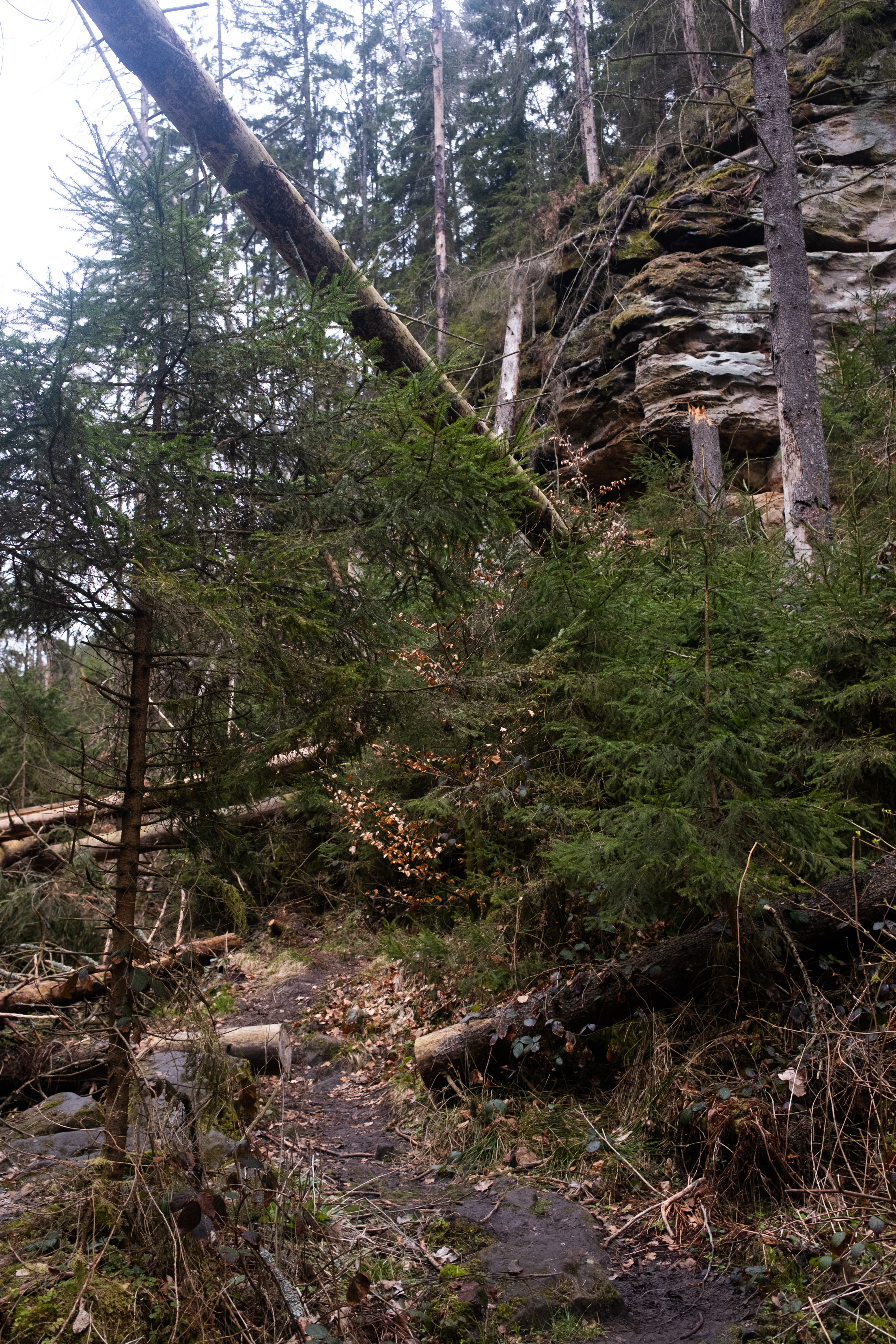
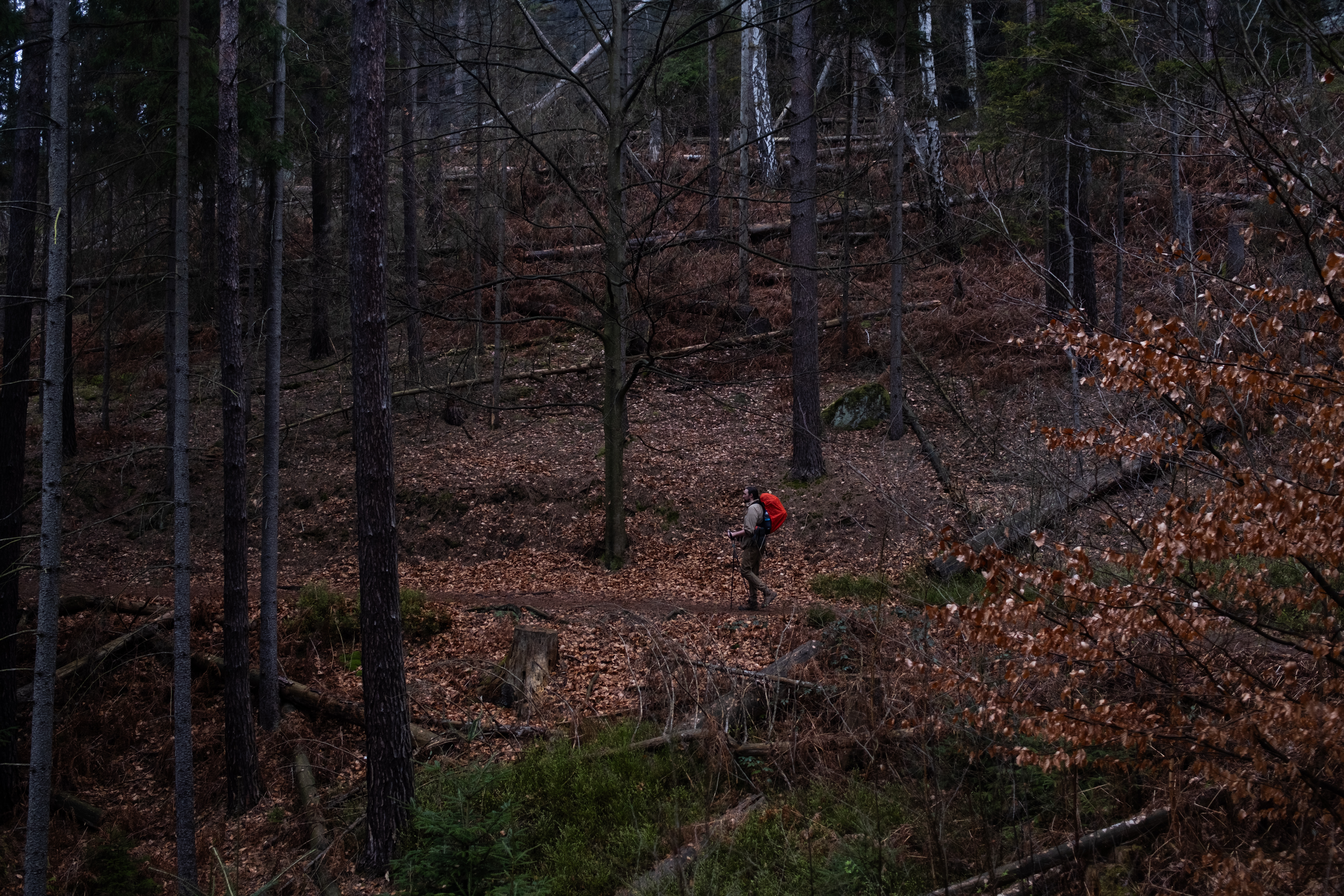
Leaving Kohlmühle took us not up but down into the bottom of a valley, which we soon would learn is characteristic of the Elbe Sandstone Mountains. These valleys would appear throughout the range, so narrow that it felt to me they were making an enclosed space, especially when I take into acount all of the trees towering over us. I felt sheltered, which was both calming and making me feel a bit claustrophobic at the same time. The trees were down across parts of the trail, which required us to be careful with our steps, and we hadn't seen anyone for a while. There was a sign at one end of the section telling us not to enter, though weirdly enough not at the end we'd come from.
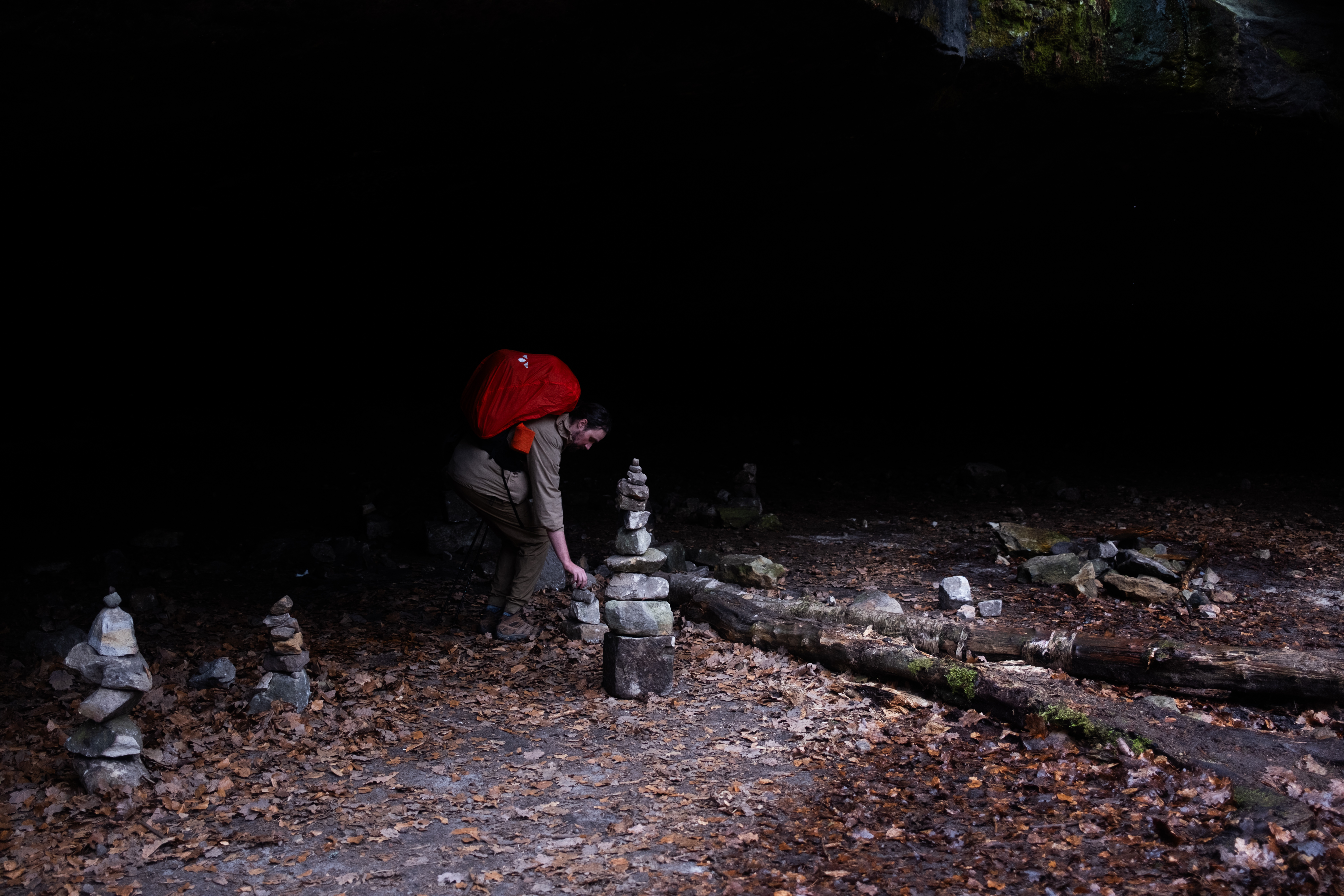
But once I got used to the feeling, I realized I liked this feeling of being close to the rock rather than looking at it from a distance, which meant I could see its texture in details and speculate about what had happened to them in the past, despite my limited geological knowledge. I could also see, and choose to enter if I wish to, all of these overhangs that were another characteristic of the mountain range, thanks to the standstone being eroded into layers. Thanks to one of the information panels scattered all along the trail, we learned the term "boofen", to boof, to sleep under natural sandstone rock overhangs or in caves. Outside of this valley, the news was doing whatever the news was doing, my ever-growing to do list was at a standstill and there was nothing I can do about it. In here, there was just the path forward and the sound of water somewhere, the fresh air of an overcast Easter morning, the smell of rain and once every few meters an overhang, inviting me to boof under it.
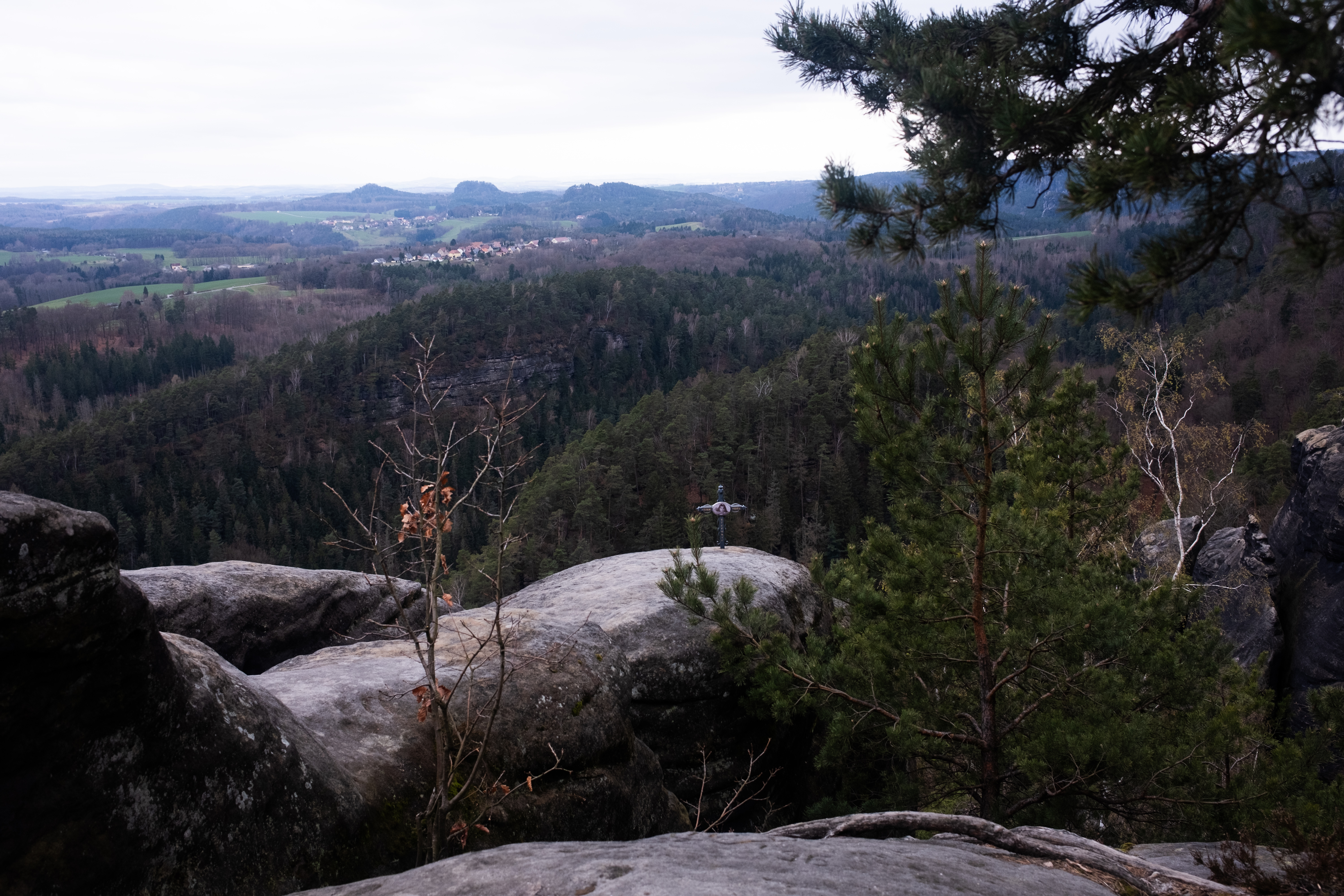
This became the rhythm of the day. Hike, descend to valley, climb out, repeat. There were viewpoints along the route where, had the weather cooperated, we would have stopped for lunch and stayed a while. But today was not our lucky day, weather wise, so we pressed on until we reached Waitzdorf, another small district, where a bus shelter gave us the perfectly sized shelter to sit inside so we could eat our sandwiches and protein bars without getting wet.
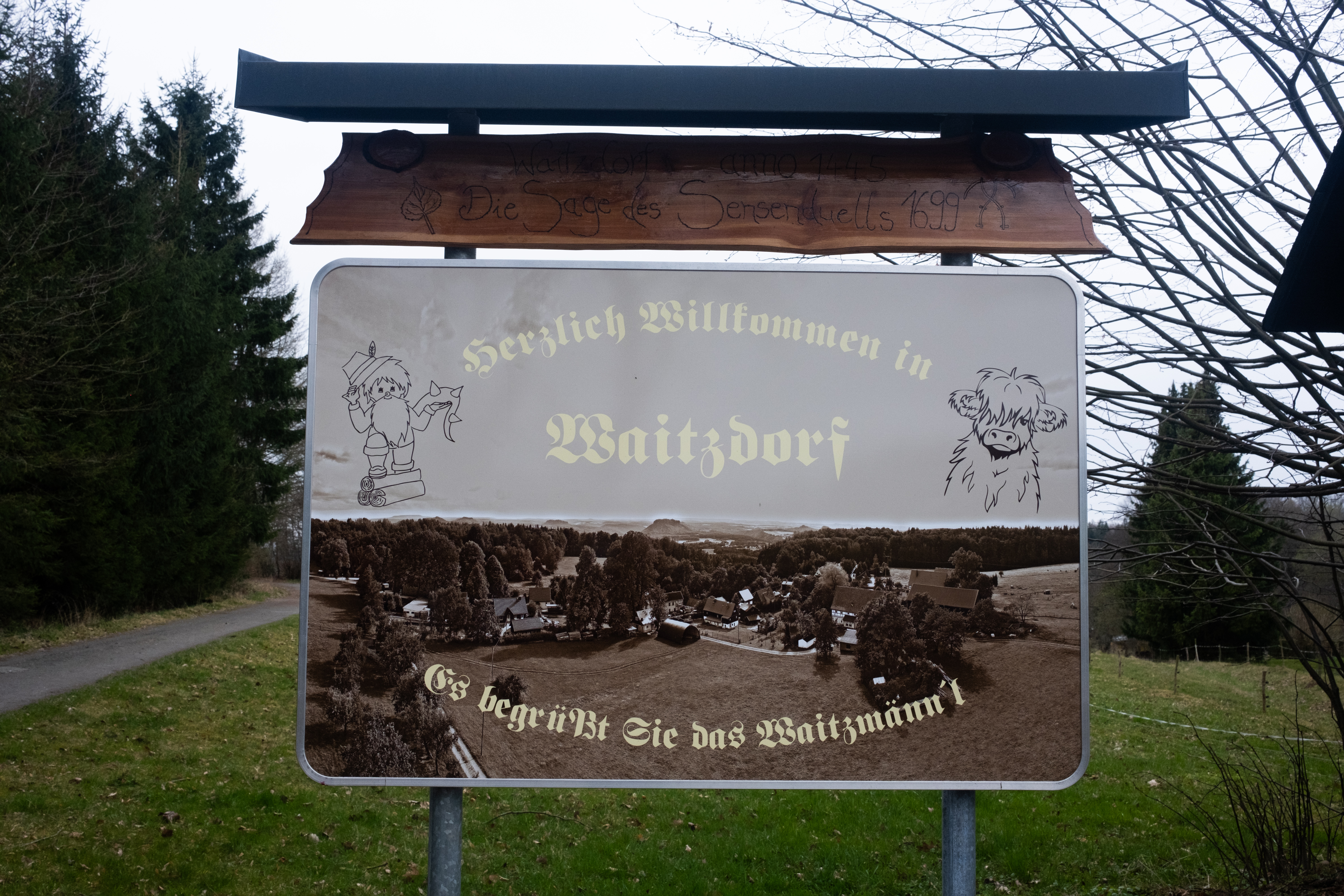
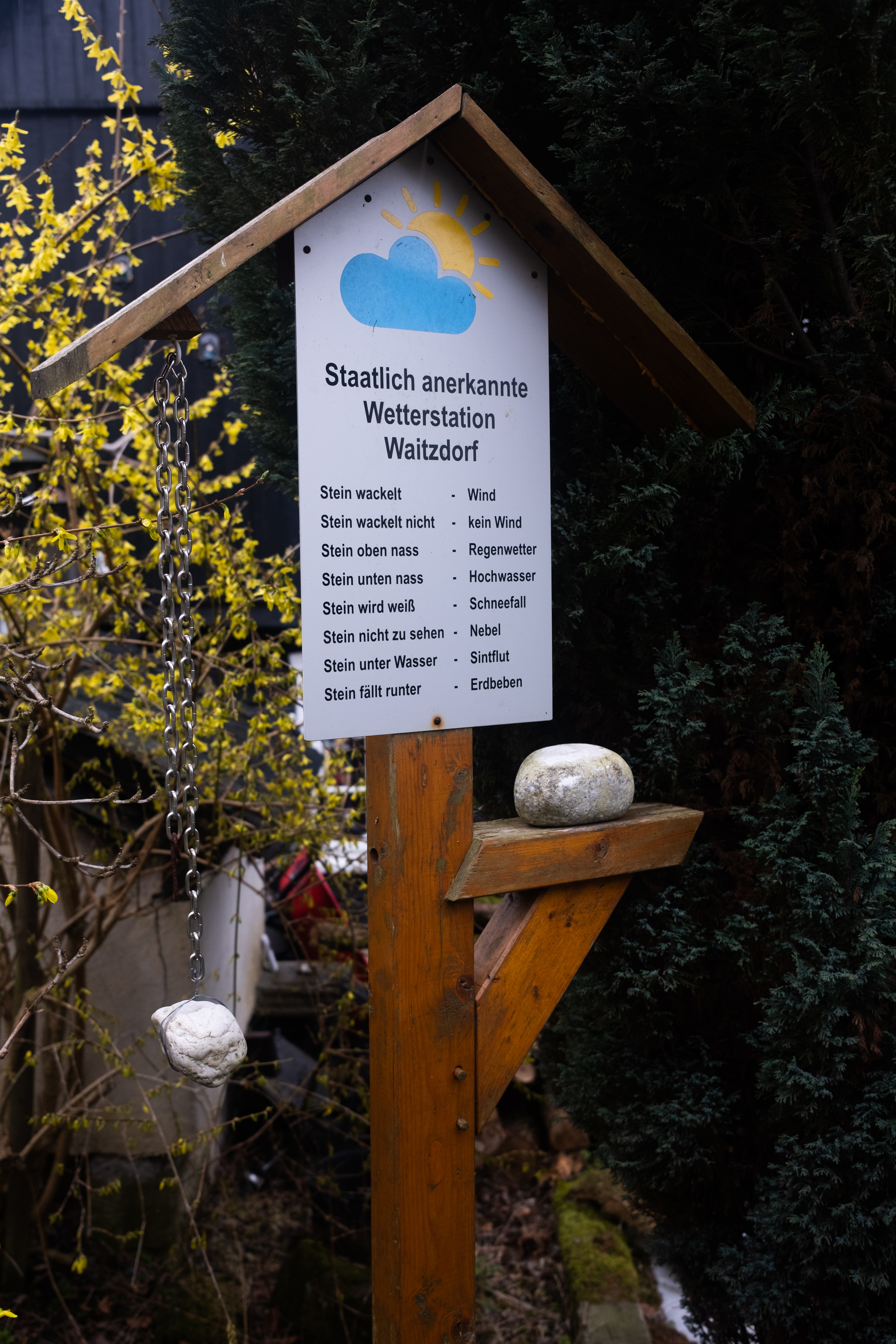
If my favorite thing about Kohlmühle was the historical panels, my favorite thing about Waitzdorf was the weather station:
We descended again after lunch. It was another knee-jerking drop back to valley level through the stairs, this time alongside a small highway, before crossing it and climbing back up through stairs that were cut into the rock. Stairs are yet another constant feature of this trail, which makes sense since the Elbe Sandstone Mountains are basically eroded rock formations.
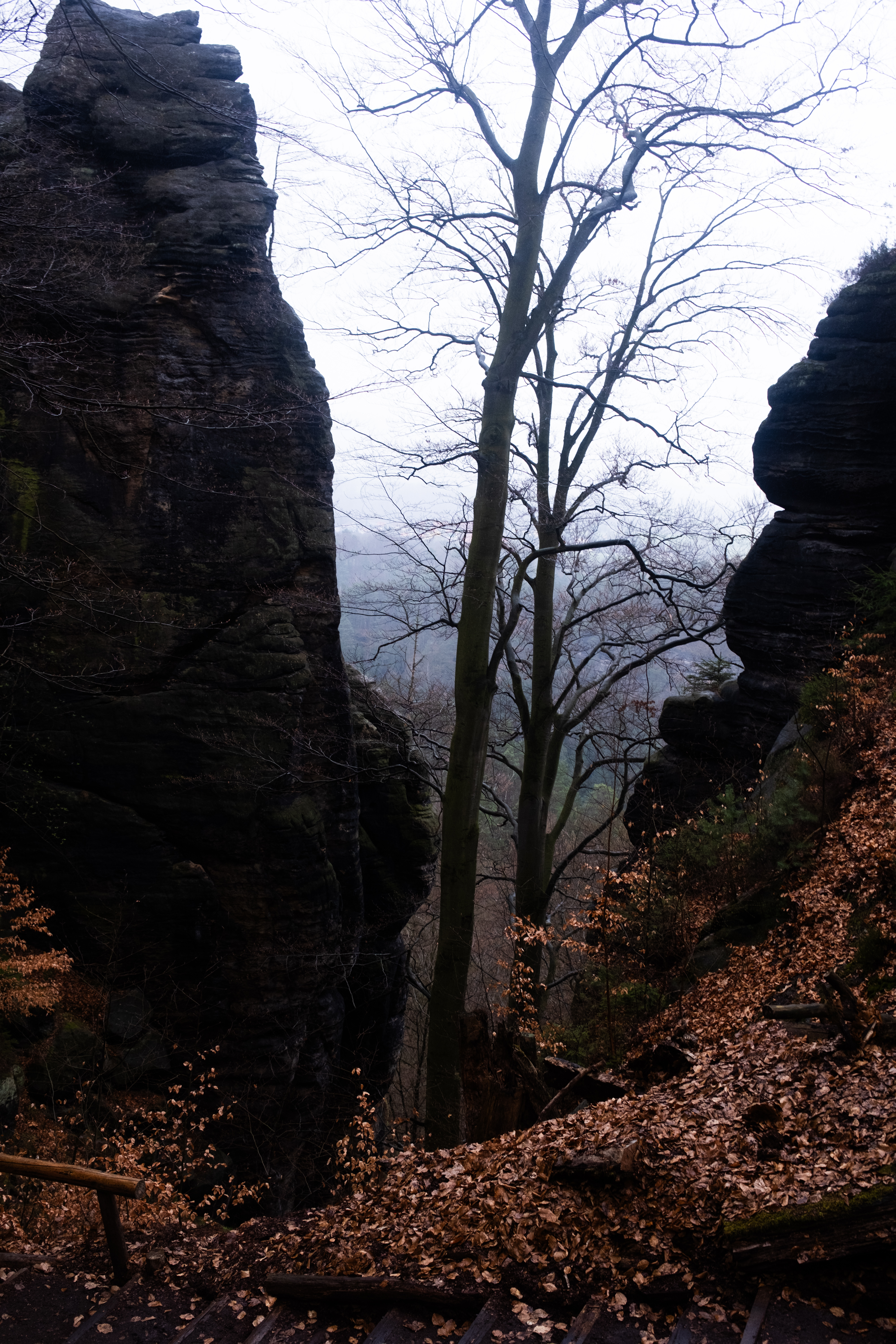
The stairs were also where we started seeing other people, mostly families, spread out across the rocks. Two teenagers greeted us as we passed — frohe Ostern, they said, Happy Easter. It started to rain as we ascended the stairs, but it did not seem to be stopping everyone. All of the hikers on the stairs pause on their tracks, put on our raincoats and colorful bag covers, before continuing on.
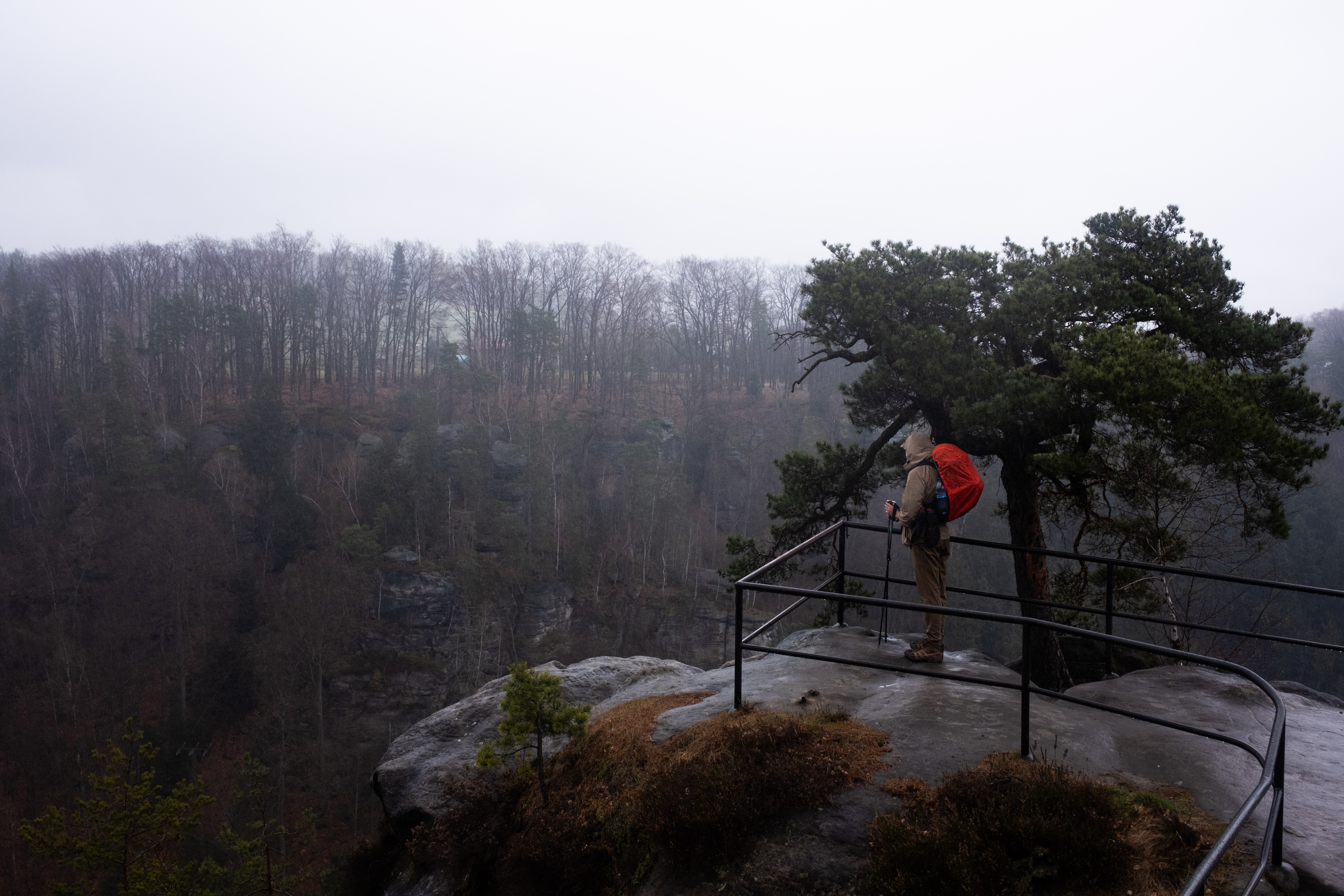
The trail soon leveled out as it continued, on and on, past a large restaurant overlooking the valley where everyone seemed to be marching towards. It was not long until we reached our stop for tonight, Hohnstein, a town I knew nothing about but would end up being one of my favorite stops on a hike. The first view of Hohnstein one would see from afar would most likely be the castle, Burg Hohnstein, perched proudly on the cliff, looking majestic and precarious at the same time. To reach the town you had to earn one final climb, which we did, and then rewarded ourselves at the café inside the castle walls with Dresdner Eierschecke and radler that wer exactly what we needed.
The castle itself, while sitting quietly in the middle of Saxon Switzerland, has seen a lot in its lifetime. It goes back to around 1200 - again, a time in history so far and remote that I would always find difficult to process and imagine. In the 1920s, it was the largest youth hostel in Germany; by the time 1933 arrived, it turned into Hohnstein concentration camp, before serving again as a youth hostel but this time for the Hitler youth. Then it served prisoners of war, before serving refugees after the wall, and eventually it became a youth hostel again. So much history to bear for a single building.
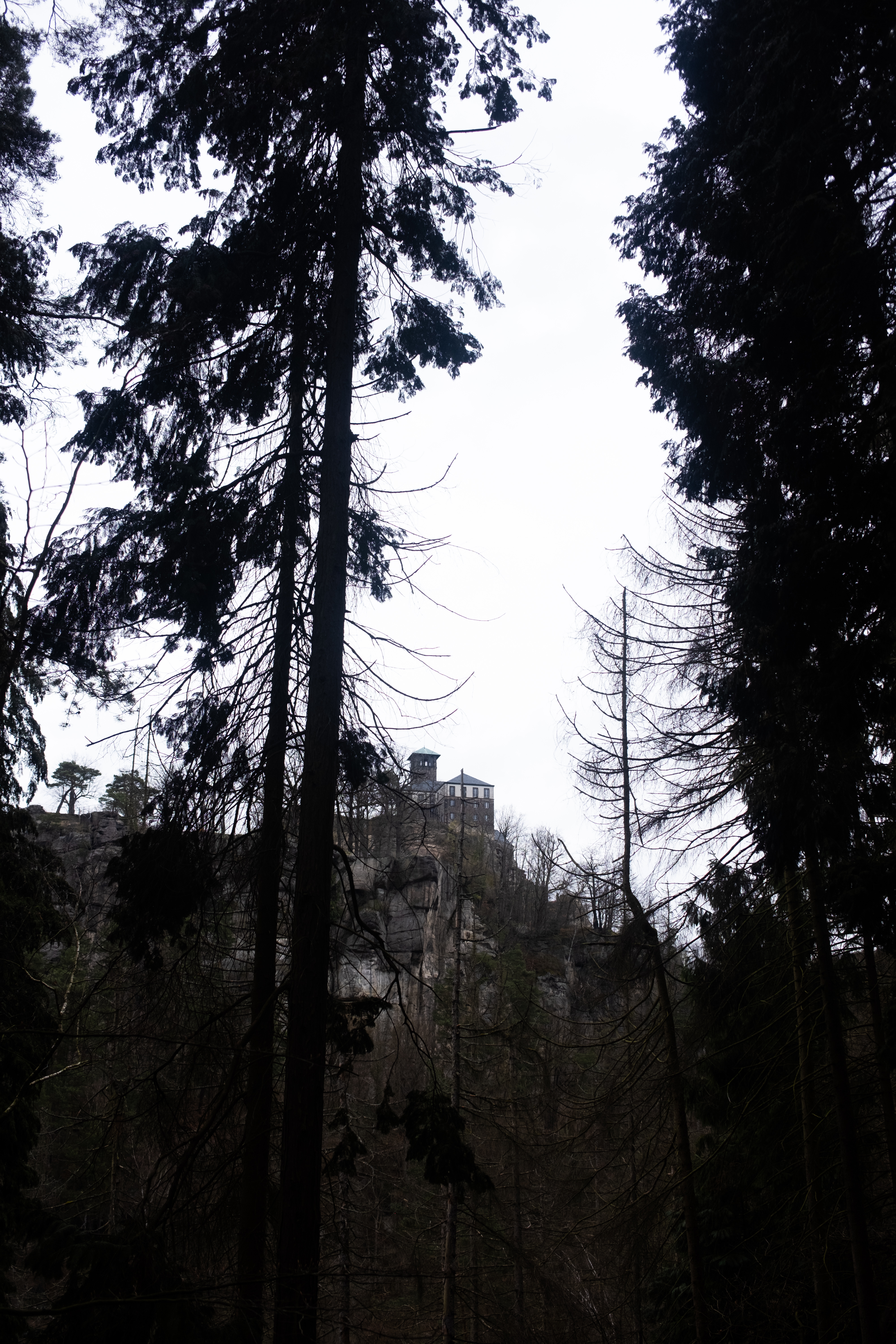
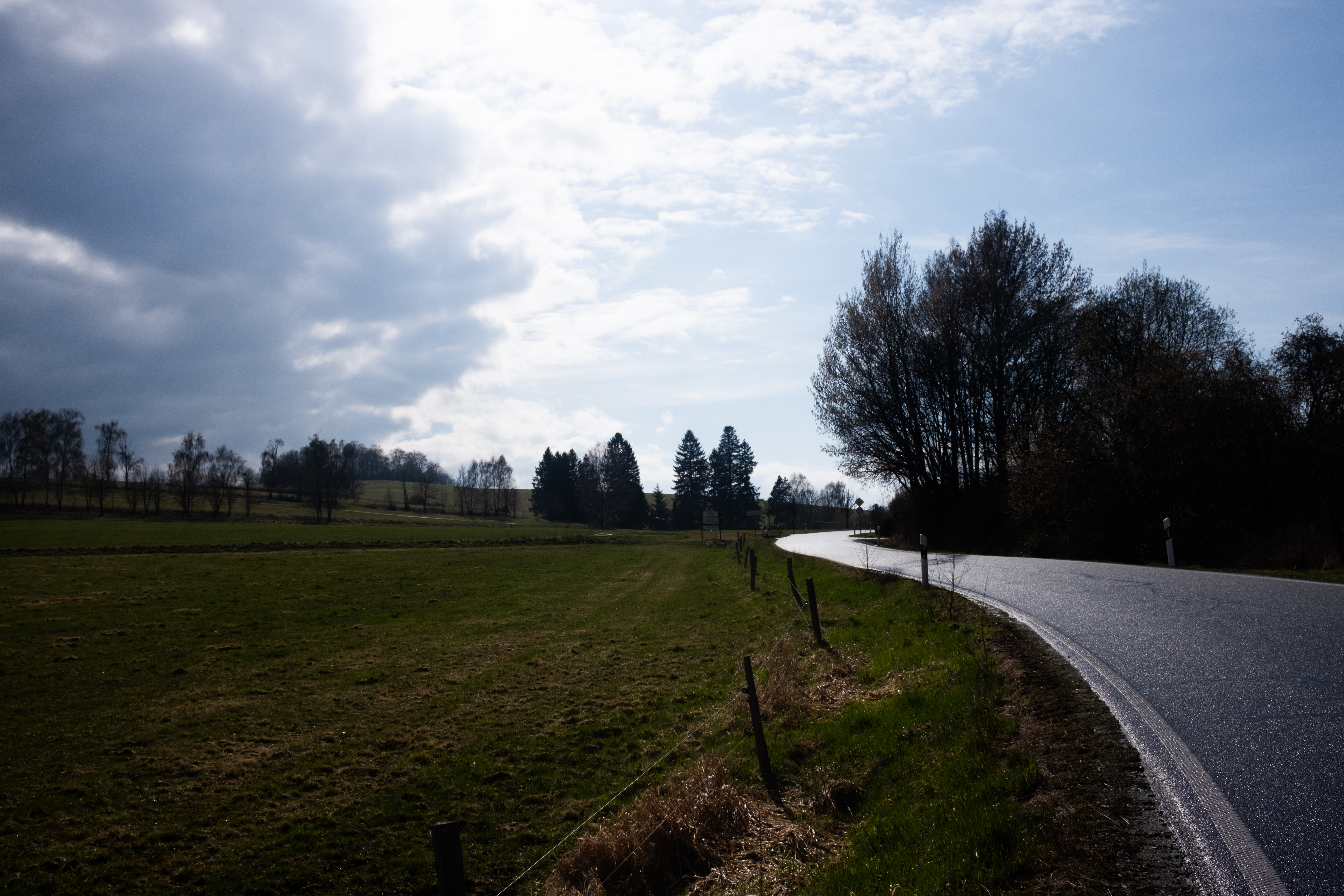
Our campsite for the night, Entenfarm, was located two kilometers outside of Hohnstein, which means we still had some more walking to do even though I had quietly decided, in my head, that we are done for today. This time we had to follow the road all the way to the campsite, and somewhere along the way the sun decided we have had enough of grey and it decided to bless us with some sunshine.
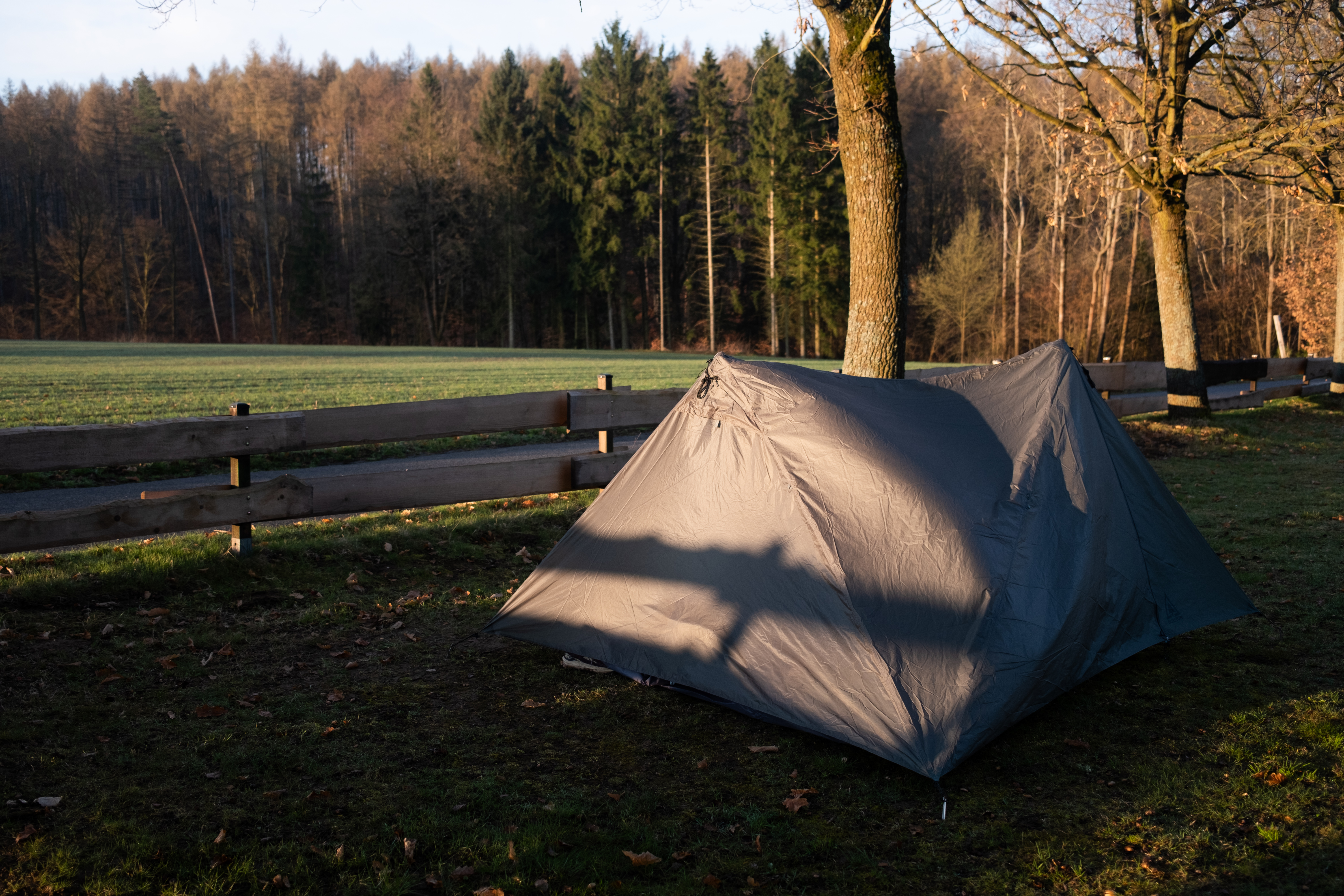
This makes setting up camp easier, as we didn't have to deal with the rain and the wind. After checking in, we picked a spot to pitch our tent. It was not crowded at all, there were maybe around three or four individual tents of various sizes, plus a cluster of tents on the other side of the field that seems to be a group of friends camping together, complete with their barbeque setup and camping chairs and every other equipment that shows that they do take this camping business seriously. The other field was full of RVs and big campervans with their big tents and even their own makeshift showers, despite the fact that the campsite also has plenty of them.
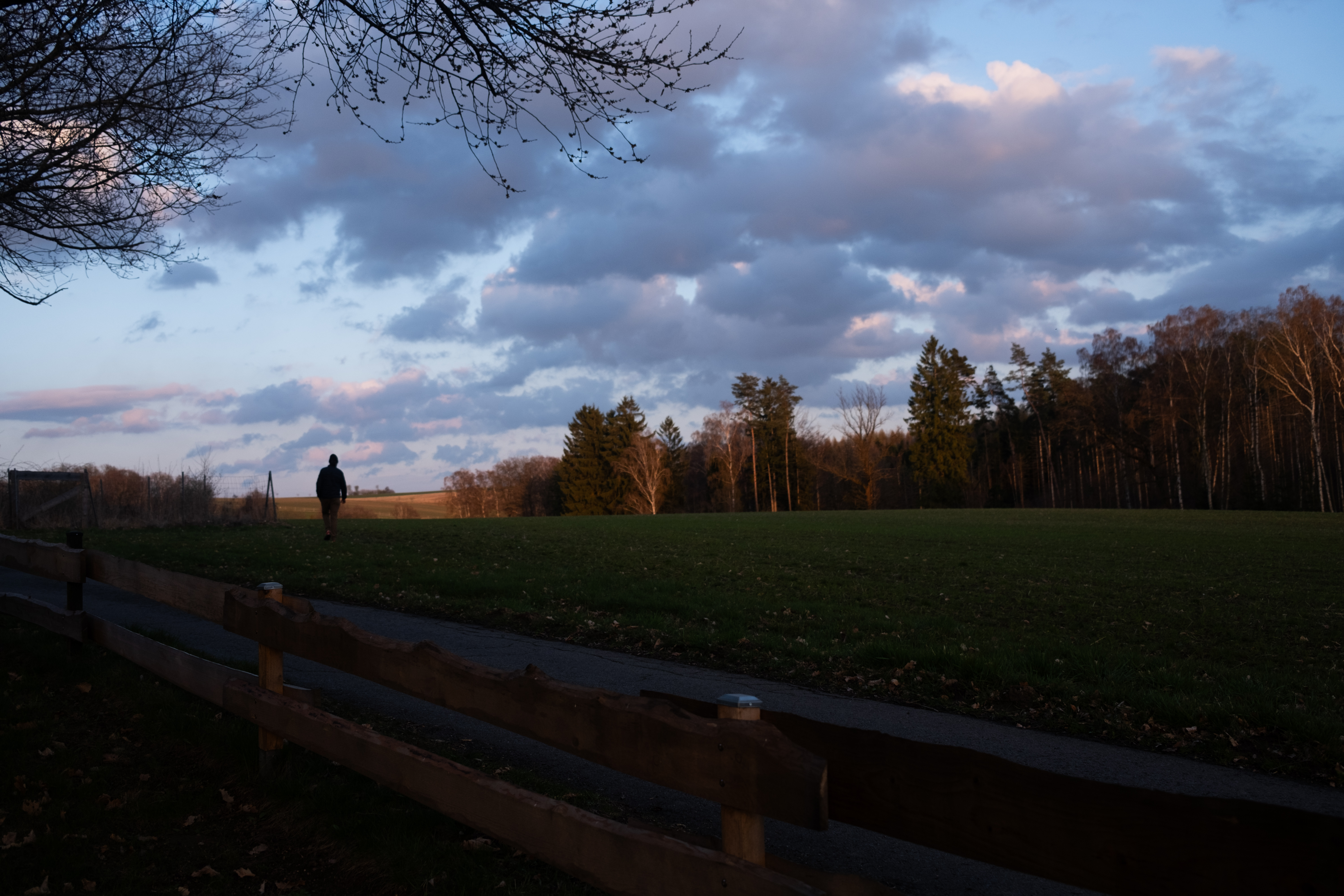
We watched the sunset as we were eating our freeze-dried pasta bolognese, and it got dark quickly before we know it. There was nothing left to do but to drift off to sleep, and so we did.